|
Lecture Notes (Diploma) Lesson Plan
DEPARTMENT OF ELECTRICAL ENGINEERING
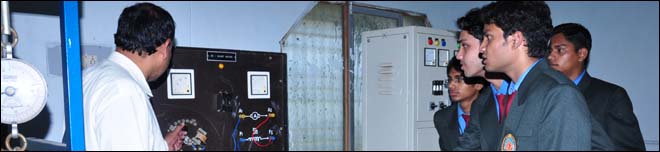
National Development in the field of energy plays a vital role. This role of National Development is closely associated with
the development in the field of electrical and electronics engineering. Everyone is familiar with the functions that electricity can perform.
The department focuses on imparting quality technical education in the areas of planning, designing, operation, and maintenance of electrical systems and equipment.The department boasts of analog control system equipments, digital control system and PC based control system setups in the
control system laboratory.
The key subjects included in the diploma are circuit analysis, digital electronics, electrical machines, transmission and distribution systems, and industrial automation. These areas are selected to reflect actual industry functions and future workforce demands.
This all becomes possible through proper teaching, able guidance and close supervision of knowledgeable and dedicated teachers
of the class rooms as well as well equipped laboratories of all disciplines of the department.
VISION
To develop industry-ready Electrical Engineers committed to innovation, excellence, and sustainable societal development.
MISSION
- M1 - To implement an effective teaching, learning process that develops technically competent and skilled electrical engineers.
- M2 - To strengthen practical and industry-oriented training so that students gain hands-on experience and are ready for professional employment.
- M3 - To develop technical, managerial, and entrepreneurial skills enabling students to innovate and create self-employment opportunities.
- M4- To encourage and guide students towards higher education, research, and career-oriented professional courses.
- M5 - To inculcate ethical values, environmental awareness, and social responsibility among students for sustainable development of society.
Program Educational Objectives (PEOs)
PEO1: To acquire strong fundamentals of electrical engineering for analyzing and designing electrical systems.
PEO2: To apply analytical, critical thinking and problem-solving skills to address real-world electrical engineering challenges.
PEO3: To demonstrate proficiency in laboratory practices and ensure safe, effective use of electrical equipment and tools.
PEO4: To exhibit ethical responsibility, professionalism, and awareness of social and environmental impacts in engineering practice.
PEO5: To pursue lifelong learning through higher education, research, skill development, and continuous professional growth.
Program Specific Outcomes (PSOs)
PSO1: Ability to apply electrical engineering knowledge and skills for testing, control, operation, and maintenance of electrical systems such as Machines, Power
Systems, Drives, and Automation.
PSO2: Ability to analyze and identify problems in diverse areas of Electrical Engineering and develop appropriate hardware and software solutions.
PSO3: Ability to design and implement electrical engineering solutions that address societal, environmental, and industrial needs with a focus on safety, sustainability, and efficiency.
PROGRAM OUTCOME (POs)
- Basic and Discipline specific knowledge: Apply knowledge of basic mathematics, science and engineering fundamentals and engineering specialization to solve the engineering problems.
- Problem analysis: Identify and analyse well-defined engineering problems using codified standard methods.
- Design/ development of solutions: Design solutions for well-defined technical problems and assist with the design of systems components or processes to meet specified needs.
- Engineering Tools, Experimentation and Testing: Apply modern engineering tools and appropriate technique to conduct standard tests and measurements.
- Engineering practices for society, sustainability and environment: Apply appropriate technology in context of society, sustainability, environment and ethical practices.
- Project Management: Use engineering management principles individually, as a team member or a leader to manage projects and effectively communicate about well-defined engineering activities.
- Life-long learning: Ability to analyse individual needs and engage in updating in the context of technological changes.
|